
• Skip to primary navigation
  • Skip to main content
  • Skip to footer
SMT_EVENTS_LOGO

SMT Golf Outing Services

Golf Event Planning, Charity Fundraising and Memorabilia

  • Home
  • About SMT Events
    • Customer Happiness
  • SMT Events Services
    • Outing Packages
  • Blog
  • Your Event
  • Contact Us
  • Shop
You are here: Home / Blog

How to choose the right golf course

The Charity Golf Guide: How to Pick a Course and Price Your Event
If you Google “how to choose the right golf course for a charity event,” the top advice is almost always: “Know your golfers’ skill levels.”
Frankly, that is terrible advice. It is entirely impossible to know the playing abilities of your supporters, let alone the guests, clients, or random friends they invite to fill their foursomes. You simply don’t know who will be there.
Instead of stressing over handicaps, talent, playing preferences and more, focus on what actually drives a successful charity tournament: balancing overall value, exclusivity, pricing strategy and cause.
1. Exclusivity is Your Secret Weapon
Quality and cost historically go hand-in-hand. While that really isn’t fact any longer, look to provide the “wow factor.”
  • The Country Club Appeal: Hosting at a private country club on a Monday provides an air of exclusivity. People love telling their friends they played a course they normally can’t access and they are excited to get into such events. 
  • The Price Illusion: With the current state of the golf industry, private courses are often priced similarly to high-end public courses for group events. Always call around—you might get a prestigious venue for a public-course price tag.
2. Shift the Focus from “Cost” to “Value”
If you charge $250 to play a public course that normally costs $75, your savvy golfers will see it as a bad investment. To justify a premium ticket price for a course they can play anytime, you must elevate the entire experience.
  • Upgrade the Swag: Ditch the standard bottle of water, cheap towel, and pack of tees. Give them a high-quality tee gift or a premium goody bag they will actually use. Give them something of value they cannot easily get somewhere else.
  • Sell the Experience: People don’t just pay for 18 holes; they pay for the atmosphere, the food, the course conditions the networking, the fun and of course, the cause..
3. Pro Tips for Flawless Execution
  • Lock It In Early: Plan as far in advance as humanly possible.
  • The Same-Day Rebook: If your event went beautifully this year, don’t wait. Re book the course for next year on the same weekday of your event before you even leave the clubhouse. Supporters will appreciate knowing and expecting when they will be back next year
The Bottom Line: The story you tell your supporters isn’t about the logistics of your tournament. It’s about the incredible value and memorable experience they will receive by choosing to spend their day supporting your cause. Go the extra mile to make your event, bigger, better, faster and of more overall value.
Filed Under: Blog

Pricing Your Golf Outing – See The Big Picture

The Real Cost of Hosting a Fundraising Golf Outing (And How to Price It)
One of the most common pitfalls for first-time organizers and nonprofit committees planning a charity golf outing is a fundamental misunderstanding of their total operational costs.
When you sit down with a golf course sales coordinator, they will often quote a clean baseline price—for example, $100 per player for green fees, a basic lunch at the turn, and maybe a couple of drink tickets. Organizers see that $100 figure, project 120 players, and assume their main liability is roughly $12,000.
Unfortunately, that baseline quote is just the starting point. Unanticipated line items, venue add-ons, and hidden logistical expenses frequently double the actual cost, completely erasing your event’s profit margin before the day even arrives.

The Hidden Line Items of a Golf Tournament
To protect your fundraiser’s bottom line, you must anticipate and account for the following commonly overlooked expenses:
1. Food and Beverage Upgrades
  • Catering Adjustments: Upgrading from standard hot dogs to a BBQ lunch or a plated dinner package can quickly add $40.00 or more per player.
  • Bar Packages: Hourly open bars, while sounding attractive, often carry steep fixed rates. If you pivot to a shorter time frame to save money, consider how it will look to your supporters and guests. Check for staffing minimums. Venues often charge flat labor fees (e.g., $200 per bartender) to staff an event of 120+ guests.
  • Service Charges: Pay attention to the fine print regarding the 15% to 20% service fee or corporate gratuity. This is an administrative fee added by the management group, not necessarily a direct tip to the staff, and it is strictly an out-of-pocket expense for your organization.
2. Fleet and Logistics Expansion
  • Volunteer Transport: You will feel that your volunteers need golf carts to navigate the course, sell raffle tickets, and manage hospitality stations, but do they really?
  • Bulk Rental Minimums: Courses rarely if ever rent “staff” carts individually; they are often brought in by the trailer load in increments of 10 or 12. You may end up paying for a full block of 10 carts even if your team only uses 3.
3. “Micro-Expenses” and Miscellaneous Supplies
Organizers often fail to track small purchases made in the days leading up to the event. These out-of-pocket expenses quickly compound:
  • Signage hardware, stakes, and framing (Home Depot runs)
  • Office supplies (pens, markers, clipboards, staplers, making photocopies, packaging tape and more)
  • Hospitality and logistics gear (buckets, bins, lighting, batteries, phone chargers and volunteer apparel)
Because volunteers frequently hold on to their receipts until days after the tournament ends, the true cost of the event remains completely invisible during execution.

The Math Behind Accurate Pricing
A frequent mistake is pricing player entry fees too close to the original baseline venue cost. It’s really quite understandable. You were excited to get started when you first sat down with the golf course. If a course charges $100 per player, an organization might want to price tickets at $125, assuming a clean $25 profit margin per head. In reality, hidden costs routinely push the actual cost per player well past that $125 mark, meaning the organization absolutely  loses money on every registration.
To build a reliable financial buffer, use a realistic pricing framework:

Metric Calculation Method Example (Based on $100 Venue Quote)
Baseline Quote The initial per-player price from the course. $100 / player
Estimated True Cost Double the baseline quote to account for hidden fees and logistics. $200 / player
Target Registration Fee Multiply the True Cost by 1.5x to 2x to secure a profitable margin. $350 to $400 / player

While committees often worry that a higher ticket price will deter participants, the alternative is running an event that fails to generate a return on investment. ALWAYS know your costs.

Why You Cannot Rely on Auction and Raffle Ticket Revenue
A common justification for low registration fees is the assumption that the event will break even via secondary revenue streams, such as silent auctions, raffles, and live item bidding.
Relying entirely on day-of add ons introduces massive financial risk, specifically, the weather risk.
If a severe storm hits on the day of your event, players will not show up to browse auction baskets or buy raffle tickets. While the golf course will typically issue rain checks to the players for a future date of a cancelled event, the venue will still keep your upfront event deposit and still be waiting for your final payment to cover their overhead and food and preparation.
Without sufficient tournament registration fees secured upfront, a rainy day can turn your major fundraiser into a severe net loss.

Designing a Profitable Sponsorship Structure
Once you understand your true per-capita costs, you can structure impactful corporate sponsorships that drive real profit.
Do not sell yourself short with cheap $75 tee-box signs that cost your organization $20 to produce and place because “it is easier”. A premium, well-structured tournament requires anchoring your budget with substantial sponsorship tiers. Align your pricing to ensure that corporate packages clear the event’s overhead and provide sufficient value to all sponsors. Allowing individual player registrations and day-of auctions to act as pure profit for your cause.
  • Title Sponsor: Something like $5,000+ (Covers a significant portion of the course footprint). But you will not sell that sponsorship witout providin value.
  • Corporate Foursome Packages: Tied directly to your adjusted $350+ per-player target rate
  • Premium Tee Signs: Priced to deliver a high margin over production costs
The Bottom Line: Never simply guess at your event expenses. Track every administrative detail, build a substantial buffer into your registration model, and price your tournament to reflect the true cost of doing business and always, ALWAYS provide actual value to sponsors and players.

Filed Under: Blog

How to Plan a Successful Golf Outing: The Ultimate Guide

Organizing a successful golf outing involves much more than reserving a golf course and inviting a few dozen friends. Whether you’re planning a charity fundraiser, corporate golf tournament, alumni event, or community outing, the challenges are often surprisingly similar: finding participants, attracting sponsors, managing expenses, coordinating volunteers, and creating an experience golfers will remember.

For many organizations, the person responsible for the outing has little or no previous event-planning experience. That’s where the expertise of Mike Tait, a longtime golf industry professional and founder of SMT Events, becomes especially valuable. In an interview with Chicago Golf Report, Tait shared insights developed through decades in the golf industry and years helping charitable organizations run golf outings.

He’s helped raise just over $32 million for charities and corporations since launching his fundraising business in 2009. His experience offers a practical roadmap for organizers across the United States, whether they are coordinating a nonprofit fundraiser, corporate tournament, school outing, or community event.

Put Your Golf Outing Plan Into Action

Make your next outing easier to organize with Chicago Golf Report’s
free Golf Outing Planning Toolkit. Get a printable planning
worksheet to track tasks and deadlines, an editable budget calculator to
estimate costs and net proceeds, and answers to common planning
questions—all in one place.


Get Your Free Golf Outing Planning Toolkit →

The Popularity of Golf Outings: A Major Part of America’s Golf Economy

Golf outings bring together businesses, charities, schools, and community organizations for fundraising, networking, entertainment, and relationship-building. Unlike competitive tournaments, many outings emphasize participation and shared experiences as much as scores.

How Popular Are Golf Outings in the United States?

The charitable impact of golf is substantial. According to the National Golf Foundation, golf-related charitable giving reached an estimated $4.6 billion in 2022. The organization reported that approximately 80% of U.S. golf facilities—more than 11,000 locations—hosted charitable events, and that more than 90% of golf’s charitable giving originated through local golf facilities and events rather than professional tournaments.

A separate 2026 analysis by OutingRFP identified 17,198 charitable golf outings itemized in a year of IRS Form 990 filings, with approximately $1.45 billion in gross receipts. That is a documented subset, not a comprehensive national count: smaller nonprofit events, unreported outings, and many corporate events are not included.

How many golf outings take place nationwide each year? No sufficiently reliable, comprehensive annual count is available to cite here. The figures above demonstrate the scale of charitable golf activity without treating a partial dataset as a total.

What Do Regional Golf Outing Figures Tell Us?

Golf outings are organized in communities across the country, but event counts are difficult to compare because charitable filings capture only a portion of the market. For example, OutingRFP’s October 2026 analysis identified 790 itemized charitable golf outings associated with Illinois organizations and approximately $69.5 million in gross receipts. This is a partial statewide figure based on filing organizations’ addresses, not a count of all outings physically held in Illinois or Chicago. The same limitation applies when interpreting figures for other states.

For organizers, the practical takeaway is national: golf outings are a well-established fundraising and relationship-building format, but results depend on local course pricing, sponsor interest, participant demand, weather, and careful execution.

What Types of Groups Organize Golf Outings?

  • Charities and nonprofit organizations: Hospitals, medical foundations, food banks, youth programs, and other nonprofits raise funds for their missions.
  • Businesses and corporations: Companies entertain clients, recognize employees, and develop relationships with customers and partners.
  • Schools and universities: Alumni associations, athletic boosters, scholarship foundations, and educational institutions support programs and reconnect graduates.
  • Chambers of commerce and professional associations: Local business networks combine sponsorship, fundraising, and networking.
  • Religious and civic organizations: Churches, service clubs, veterans’ organizations, and community groups support local initiatives.
  • Sports organizations: Youth teams, athletic departments, and sports foundations fund travel, equipment, and scholarships.
  • Families and memorial foundations: Organizers honor loved ones while supporting research, scholarships, and meaningful causes.

Why Do Golf Outings Remain Popular?

Golf provides several hours for conversation and relationship-building, offers multiple potential fundraising streams, and accommodates a wide range of abilities when organizers choose accessible formats. Successful annual outings can also develop loyal participants and returning sponsors.

But popularity alone doesn’t guarantee a successful event. As Tait’s experience illustrates, the difference often comes down to preparation, organization, and understanding what motivates participants.

1. Start Planning Your Golf Outing Earlier Than You Think

One common mistake is waiting too long to begin preparations. Organizers hosting an August outing may assume starting in April leaves ample time, but Tait warns that sponsorship budgets are often committed much earlier. Many businesses establish charitable giving plans during the preceding fall.

For a summer outing, consider beginning sponsorship conversations the previous autumn. Early preparation also improves your choice of courses, availability of volunteers, and time to promote registration.

Suggested Golf Outing Planning Timeline

Time Before Event Primary Activities
9–12 months Set goals, identify venues, begin sponsor outreach
6–9 months Reserve the course, build the budget, recruit a committee
4–6 months Open registration, confirm sponsors, organize contests
2–3 months Promote the outing, secure prizes, finalize logistics
1 month Confirm participants, volunteers, signage, and catering
Event week Review assignments, schedules, and weather contingencies
After the event Thank supporters, report results, begin next year’s planning

These are suggested windows, not fixed requirements; larger events may need more lead time.

2. Recruit 36 Foursomes Instead of 144 Individual Golfers

A traditional full-field golf outing accommodates 144 players in 36 foursomes. Finding 144 individual golfers can feel overwhelming to a volunteer committee.

Tait recommends reframing the problem: recruit 36 foursome captains, each of whom brings three friends, colleagues, or family members. The total is still 144, but the task becomes much more manageable.

Practical Recruitment Strategies

  • Ask committee members to identify potential foursome captains.
  • Invite corporate sponsors to register employee or client teams.
  • Encourage previous participants to return with friends.
  • Contact local businesses, alumni networks, and professional associations.
  • Offer early registration incentives where appropriate.

The key is to distribute recruitment responsibilities rather than relying on one or two organizers to fill an entire field.

3. Select a Golf Course That Fits Your Event

Across the United States, public, municipal, resort, daily-fee, and private courses may host charitable and corporate outings, but the right venue depends on the event’s audience, budget, and objectives. A high-end facility may suit a client appreciation outing, while an accessible public course may be better for a community fundraiser.

Questions to Ask Before Booking

  • How many golfers can the facility accommodate?
  • Is a shotgun start available?
  • What is included in the package?
  • What food and beverage options are offered?
  • Does the course provide registration or scoring support?
  • Are outside contests and vendors permitted?
  • What is the weather cancellation or rescheduling policy?
  • Are there additional charges for carts, staffing, or event services?

Request a written proposal with a clear breakdown of costs and responsibilities. If you are organizing an outing in the Chicago region, Chicago Golf Report also offers local course coverage; organizers elsewhere can use regional golf associations and local course directories.

Compare Golf Course Proposals with OutingRFP

OUTING-RFP

OutingRFP

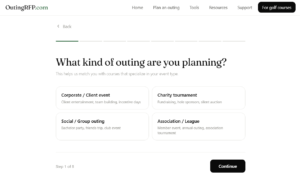
One way to make the venue-selection process more efficient is OutingRFP, a platform founded by Scott Pollock, owner of Tanglewood Golf Club in Ohio. Rather than contacting courses individually and attempting to compare differently structured packages, organizers can submit a single request for proposal specifying their preferred location, date, number of golfers, format, budget, and food and beverage requirements. Participating courses can respond with proposals that organizers compare side by side. The service describes itself as free for outing planners and is currently in early access; the availability and speed of responses will depend on participating courses in the area.

Whether using OutingRFP or contacting facilities directly, request at least three comparable quotes when practical. Ask each venue to separate green fees, carts, food, beverages, minimum golfer counts, shotgun-start charges, service fees, and rain policies. Choose the best overall fit—not automatically the lowest price. A slightly more expensive venue with strong outing coordination, suitable facilities, and a better weather plan may offer greater value.

Put Your Golf Outing Plan Into Action

Make your next outing easier to organize with Chicago Golf Report’s
free Golf Outing Planning Toolkit. Get a printable planning
worksheet to track tasks and deadlines, an editable budget calculator to
estimate costs and net proceeds, and answers to common planning
questions—all in one place.


Get Your Free Golf Outing Planning Toolkit →

4. Make Your Golf Outing Enjoyable for Everyone

Some outing participants play only once or twice a year; others may be borrowing clubs. Tait believes a successful event should minimize pressure on less-experienced golfers.

Why the Scramble Format Works

In a scramble, each member of a team hits a shot, the group selects the preferred result, and everyone plays the next shot from that location. This continues until the ball is holed. The format allows beginners to contribute while keeping the round social and collaborative.

Tait generally favors scrambles over more complicated formats that can slow play or intimidate occasional golfers. The objective is to create an enjoyable outing, not merely identify the strongest players.

5. Create Games That Don’t Require Golfing Skill

Longest-drive and closest-to-the-pin contests often favor experienced golfers. Tait takes a different approach: during the our interview, he described approximately 45 games designed to give people opportunities to win without exceptional golf skills.

One example is his golf ball launcher, which sends a ball hundreds of yards toward a target. Other activities use creative targets, prizes, and elements of chance to encourage participation.

Don’t Offer Too Many Games

Every activity takes time. Tait suggests that approximately three well-designed on-course games can provide a good balance—roughly one every six holes on an 18-hole course. Too many contests can make the round excessively long and frustrate participants.

Increase Golf Outing Revenue with Fundraising Scratch Cards

One creative way to generate additional revenue at a charity golf outing is through fundraising scratch cards. SMT Events offers several variations, including an 18-hole golf scorecard game and Texas Hold’em poker cards. Participants purchase a card, scratch off the concealed results, and compete for prizes based on their scores or poker hands. Unlike traditional golf competitions, scratch cards don’t require any golfing ability, making them an entertaining fundraising activity for golfers, dinner guests, volunteers, and other supporters. Organizers can sell cards during registration, throughout the outing, or at the post-round reception, creating another revenue opportunity beyond entry fees and traditional sponsorships.

Scratch cards can also create additional sponsorship opportunities. SMT Events offers customized cards featuring sponsor logos or business names on the reverse side, allowing organizers to generate revenue while providing participating businesses with additional visibility. For example, selling 144 cards at $20 each would generate $2,880 in gross revenue, before card costs, prizes, shipping, and other expenses. Depending on the game selected, organizers may also offer vacation packages or other prizes to encourage participation. Before selecting a program, organizers should confirm current pricing, prize arrangements, and applicable state or local rules governing chance-based fundraising activities.

6. Build a Sponsorship Strategy Before the Event

Sponsorships are among the most important sources of golf outing revenue. Tait encourages organizers to start outreach early and think beyond the traditional single tee sign per hole.

Potential opportunities include presenting sponsorships, registration areas, golf carts, beverage stations, on-course contests, hospitality, raffles, and awards. Different levels can make it possible for supporters with varying budgets to participate, subject to the course’s signage and vendor policies.

Research Potential Sponsors with Sponsor Seek

SPONSOR SEEK

Sponsor Seek

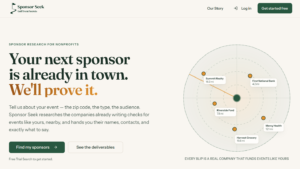
Mike Tait has also launched Sponsor Seek, a new resource focused on sponsor research for nonprofit organizations. For golf outing committees, the central challenge is not merely creating a sponsorship menu; it is identifying businesses and other potential supporters whose interests align with the event’s cause, audience, and community. A dedicated research resource can provide a starting point for building that prospect list. Because Sponsor Seek is newly launched, organizers should take a look at its current features. There is a completely free trial which includes custom sponsors request letters for you.

Turn research into a disciplined outreach plan: build a shortlist of local employers, past donors, vendors, alumni-owned businesses, and companies with relevant community-giving priorities. For each prospect, identify a specific reason the event may appeal to them, propose an appropriate sponsorship level, and explain the recognition or engagement they will receive. Track the contact person, outreach date, response, commitment, artwork deadline, and post-event thank-you. A personalized invitation tied to a clear cause is more compelling than sending the same generic sponsorship letter to dozens of businesses.

Give Sponsors a Reason to Return

Offer a concise sponsor prospectus with the audience profile, expected attendance, mission, benefits, deadlines, and sponsorship tiers. Be specific about what is included—signage, speaking recognition, newsletter acknowledgement, social mentions, or a foursome—and obtain course approval for on-site activations. After the event, send each sponsor a thank-you and a short impact report showing participation, funds raised, and how the proceeds will be used. Avoid promising marketing impressions or leads that you cannot substantiate.

For a detailed discussion of sponsorships, entry fees, raffles, auctions, and games, read Chicago Golf Report’s companion article: How to Avoid Disaster at Your Golf Outing.

7. Establish a Realistic Budget and Registration Price

Tait recalled one event paying approximately $180 per golfer in course-related costs while charging participants just $178. The organizers expected to make up the shortfall through raffles and games, but that was a risky assumption: not every attendee buys raffle tickets, bids on auction items, or enters contests.

Common Golf Outing Expenses

  • Golf course fees and carts
  • Food and beverages
  • Golfer gifts and contest prizes
  • Signage and promotional materials
  • Registration technology
  • Insurance and administrative expenses
  • Staffing and entertainment

Set registration prices based on the event’s actual costs, intended audience, and fundraising goals. Sponsorships and optional activities should strengthen the financial result, not conceal an unsustainable base price.

8. Make Life Easier for Your Volunteers

Outing committees are often made up of committed volunteers without event-management experience. Managing registrations, sponsors, prizes, auctions, contests, and participant communications can quickly become overwhelming.

Tait’s approach is to handle many operational details so committees can focus on recruiting golfers and sponsors. Even without outside help, organizers can apply the same principle by assigning clear ownership.

Assign Specific Responsibilities

  • Golf course coordination
  • Sponsorship outreach
  • Golfer registration
  • Volunteer recruitment
  • Prizes, raffles, and auctions
  • Event-day operations
  • Participant communications and follow-up

Every task should have an owner and a deadline. A small, organized committee can accomplish more than a larger group without clear roles.

9. Focus on the Entire Participant Experience

Golfers may attend to support a charity, entertain clients, network, or spend time with friends. Whatever their motivation, they should leave feeling the outing was worthwhile.

Tait encourages organizers to reconsider generic gift bags. Rather than defaulting to a sleeve of balls, tees, and a small towel, choose items participants will genuinely value.

Details That Make a Difference

  • Simple registration and clear arrival instructions
  • An on-time start and manageable pace of play
  • Welcoming activities for inexperienced golfers
  • Convenient food and beverage service
  • Efficient awards and presentations
  • Clear communication of the event’s charitable purpose

A memorable experience helps encourage returning participants and sponsors, both of which can strengthen future events.

10. Never Lose Sight of the Event’s Purpose

For Mike Tait, golf outing fundraising is personal. He launched his business in 2009 after losing his mother to lung cancer.

During the our Chicago Golf Report interview, he recalled helping an organization supporting children with disabilities. The organizers were initially apprehensive about new fundraising activities, but after the outing they were moved by the amount collected for their cause.

One of the organizers told Tait that his mother would be proud of him. The moment stayed with him.

Although he has worked with enormous outings—including a 600-participant event at Cog Hill—he identified this smaller charitable experience as one of his most meaningful memories.

A successful golf outing isn’t measured only by participation or revenue. It’s also measured by the difference it makes for the people and organizations it supports.

Build a Budget That Shows Net Proceeds, Not Just Revenue

For a charity outing, gross receipts are not the same as money available for the cause. Build a spreadsheet with separate rows for player registrations, sponsorships, donations, raffle and auction receipts, and games. Subtract venue costs, food and beverages, prizes, signage, payment processing, insurance, and any third-party fees. Keep in-kind contributions separate from cash revenue so the financial picture remains clear.

For example, an outing with 100 golfers paying $200 each, $12,000 in sponsorships, and $4,000 from games and auctions would generate $36,000 in gross receipts. If all cash expenses totaled $21,000, the event would produce $15,000 in net proceeds before any additional obligations. This is an illustrative scenario, not an industry average. Test lower-attendance and bad-weather scenarios before committing to nonrefundable costs.

Create an Event-Day Run of Show

A written schedule helps volunteers, the golf professional, caterer, and sponsors stay coordinated. For a hypothetical 9:00 a.m. shotgun start, an organizer might open registration at 7:30 a.m., hold a brief welcome and rules announcement at 8:40 a.m., start play at 9:00 a.m., and schedule lunch, awards, and fundraising activities around the course’s estimated finish time. Confirm actual timing with the host facility; a full outing can take considerably longer than a standard round.

Assign one person to make final decisions on weather, delays, and changes. Prepare a printed contact sheet, golfer roster, foursome assignments, sponsor placements, prize inventory, volunteer shifts, emergency procedures, and a backup plan for rain or lightning. Verify any raffle, contest, and charitable solicitation requirements with the appropriate organizers and authorities before selling tickets or accepting donations.

Measure Success and Make Next Year’s Outing Better

Within a week, reconcile income and expenses, thank sponsors and volunteers, and share the outcome with participants. Review net proceeds, cost per golfer, registration conversion, sponsor renewal interest, pace of play, and participant feedback. If the outing supports a charitable cause, communicate how funds will be used without confusing gross receipts with the actual charitable contribution.

Ask one simple question of golfers, sponsors, and volunteers: What should we keep, change, or eliminate next year? Document the answers while memories are fresh. Annual improvement—not adding more games or increasing prices automatically—is how a one-time event becomes a lasting community tradition.

Free Golf Outing Planning Toolkit: Checklist, Budget Calculator, and FAQ

Put these recommendations into practice with Chicago Golf Report’s free Golf Outing Planning Toolkit. The downloadable resources include a printable planning worksheet to assign tasks and deadlines, an editable budget calculator to estimate net proceeds and break-even attendance, and a frequently asked questions guide covering common event-planning decisions. They are useful for organizers in any U.S. market.

Get the free Golf Outing Planning Toolkit

Golf Outing Planning Checklist

Planning and Logistics

  • Set fundraising and participation goals.
  • Choose a date and reserve a course.
  • Confirm the format and event schedule.
  • Develop a realistic budget.
  • Recruit committee members and volunteers.

Fundraising and Promotion

  • Identify and approach sponsors.
  • Establish registration pricing.
  • Recruit foursome captains.
  • Prepare promotional materials.
  • Plan raffles, auctions, and contests.

Participant Experience

  • Choose appropriate games and prizes.
  • Confirm food and beverage plans.
  • Prepare registration materials and gifts.
  • Assign event-day responsibilities.
  • Send final instructions to golfers.

After the Outing

  • Thank sponsors, golfers, and volunteers.
  • Calculate the event’s financial results.
  • Share the impact with supporters.
  • Collect feedback.
  • Begin planning next year’s event.

Building a Better Golf Outing

From small-town charity fundraisers to major corporate tournaments, successful golf outings share many of the same fundamentals. Selecting the right golf course is only the beginning.

As Mike Tait’s experience demonstrates, successful events depend on early planning, effective recruitment, appropriate pricing, inclusive activities, and an understanding of what participants value.

The best outings combine an enjoyable day on the course with a clear purpose and a well-organized fundraising strategy—creating an event that golfers and sponsors want to support again.

Learn More About Mike Tait and Golf Outing Fundraising

Mike Tait is a longtime golf industry professional and founder of SMT Events. His experience helping organizations plan fundraising activities offers valuable guidance for volunteer committees seeking to simplify their outings and raise more money.

This article draws on Chicago Golf Report’s 2024 interview with Mike Tait. Fundraising totals and descriptions of services reflect information shared at that time. National statistics refer to the cited reporting periods; a complete annual count of U.S. golf outings is not available here.

Planning your next golf outing? Download the free Golf Outing Planning Toolkit for a printable planning worksheet, editable budget calculator, and answers to common planning questions. The toolkit is designed for outing organizers nationwide.

Filed Under: Blog

Credit Card Processing Fee Reality Check

It is always shocking that tournament organizers worry about 2.5-3% credit card processing fees. You always hear –“We’re losing money on every transaction!”


This perspective misses the larger reality: you’re not losing 3% of revenue; you’re gaining 100% of transactions that wouldn’t happen without card acceptance.


Cash-Only Raffle Example:

  • 144 golfers attend
  • 40% carry enough cash for raffle tickets
  • Average cash purchase: $20
  • Total revenue: $1,152


Card-Accepted Raffle Example:

  • 144 golfers attend
  • Up to 90% participate when cards accepted
  • Average card purchase: $40 (impulse purchases increase)
  • Processing fee: 2.9%
  • Net revenue: $5,200 – $151 credit card fees = $5,049


The value of using credit card readers and QR Codes more than offsets processing fees many times over. This same principle applies to every revenue stream that you have.


Card acceptance doesn’t cost money. It makes money. Lots of it.

Filed Under: Blog Tagged With: Golf outing credit card processing, making money at your golf outing, QR Codes

Outing Price Based on Value, Not Cause

Some organizers believe that a “more important” cause justifies higher pricing, or conversely, that a “less critical” cause requires lower pricing to attract participants. This is backwards.


Price your event based on:

  • The quality of the golf course and amenities
  • What comparable golf outings in your area charge
  • The total value package you’re delivering (golf, food, gifts, prizes)
  • Your actual costs plus appropriate margin


Your cause should not be a pricing variable. A well-executed event for grade school tables should command the same price as a well-executed event for medical research if the golf course quality, amenities, and overall experience are equivalent.

Filed Under: Blog Tagged With: golf outing price, how to price your charity golf outing, Pricing a golf outing

  • Page 1
  • Page 2
  • Page 3
  • Interim pages omitted …
  • Page 7
  • Go to Next Page »

Quick Links

  • Privacy Policy
  • Customer Happiness
  • About SMT Events
  • Contact Us
SMT_EVENTS_LOGO

Contact Us

info@smtgolf.com
888-693-4001
SMT Events and Fundraising Inc.
334 Prairieview Dr.
Oswego,IL 60543

Content © Copyright SMT Events and Fundraising Inc.